
A vibrant street art mural on a weathered brick wall in Freetown Christiania, Copenhagen's famous autonomous neighborhood. The central feature is a large green cannabis leaf above the bold word "LEGALIZE" in green letters, with a stylized red train illustrated below it, adorned with smaller cannabis leaves. The top of the mural has a red arched frame with three yellow circles resembling lights. The surrounding wall is covered in colorful graffiti and tags, with overgrown bushes and plants at the base, arched windows on either side, and a quirky cartoon rabbit character painted nearby. The scene captures the bohemian, countercultural spirit of Christiania, known for its advocacy of cannabis legalization and artistic expression.
Christiania
0


In the very heart of Copenhagen, on the grounds of a former naval base, one of Europe’s most famous communes was born in 1971 — Christiania. Abandoned barracks that had stood empty for years suddenly gained a second life when around 150 artists, musicians, and journalists, led by well-known newspaper editor Jacob Ludvigsen, declared: “Why not create a territory of freedom here?”
Hundreds of young people soon flocked to this newly proclaimed “free state.” It was a time of crisis and change. Finding a job was difficult; finding affordable housing — even harder. Young people with no money and no real chance of getting an apartment saw in Christiania a rare opportunity.
“We simply had nowhere to live. Times were tough: if you were young and broke, getting work was extremely difficult. Housing was nearly impossible to afford. And then suddenly we read in the paper: here’s an entire city, ready to be inhabited. A place where we could live, find purpose, and not pay outrageous sums for a roof over our heads” — say the indigenous residents.
And so, amid the empty warehouses and barracks, a unique experiment in self-governance was born — one that would later become a Copenhagen legend.
This is a place with a strong countercultural spirit: graffiti, music, small workshops, and the slow pace of community life. For many visitors, it’s a must-see, offering an atmosphere unlike anything else in a European capital.
A Brief History and Legal Status
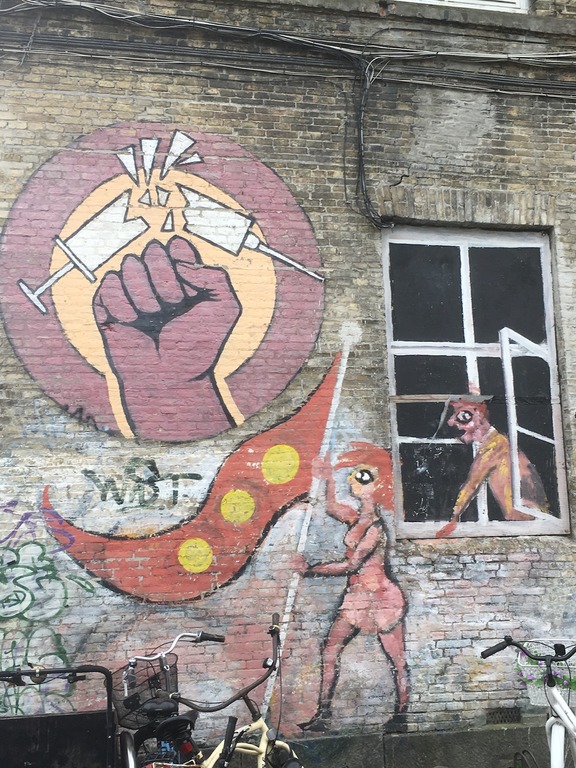
Founded in 1971, Christiania began when a group of hippies and activists occupied abandoned military barracks on the island of Christianshavn. Many of the original residents had simply read in the newspaper that a “free city” had been created in central Copenhagen where anyone could come and live.
Christiania’s mission was clear: to build a society that governs itself, a place where everyone can freely express their opinion. Radical for Europe at the time — yet it resonated. The inhabitants of this newly proclaimed “state” were, in essence, opponents of “the system” — quiet rebels with a joint in hand.
Christiania became an experiment in self-rule, with its own rules, culture, and markets. Over the decades, its status shifted — from semi-legal to various forms of cooperation with the city — but its spirit of independence has endured.
Pusher Street – The Street of Hash and Marijuana Dealers
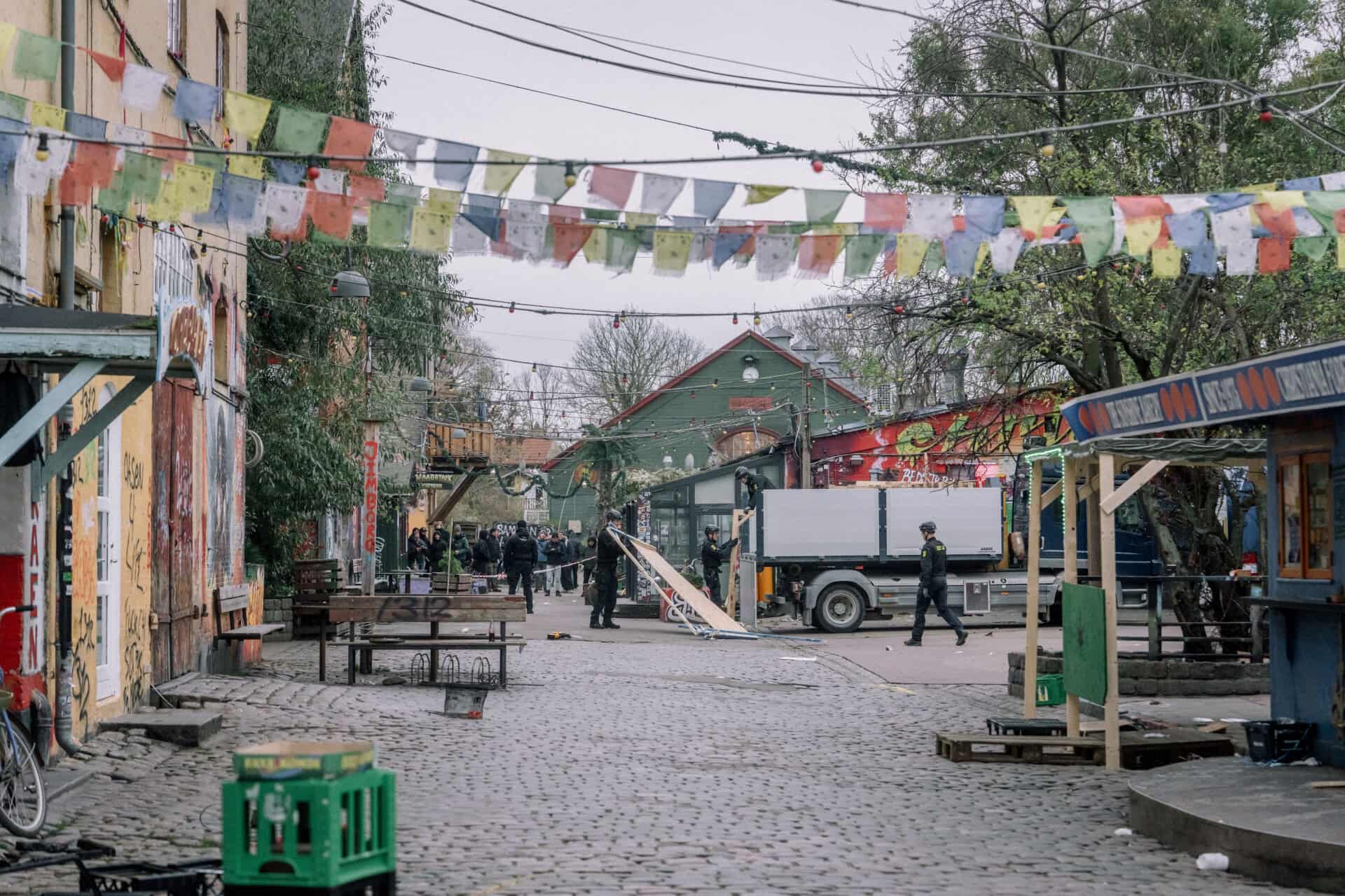
One of the first areas to get a name after squatters took over the old military base in 1971 was what became known as Pusher Street. Strictly speaking, it’s hardly a street at all — more of a small square across from the community administration building, where the first hippies began to settle.
Christiania quickly became a cult destination in Europe. In a two-story stone building at the center of the former naval base, squatters held meetings, parties, and community events. And right by the entrance, vendors offered all sorts of cannabis and hashish. This small corner was soon dubbed “the street of natural plant sellers.”
At first, the sellers were just hippies like everyone else in Christiania. But by the 1980s, biker gangs — including Hell’s Angels and Bullshit — took control of the drug trade. Today, although it can’t be confirmed officially, many believe that much of the business is run by migrants. Whatever the case, drug dealing remains Christiania’s most stable and profitable trade — so much so that Pusher Street is now marked on Copenhagen’s official city map.
At each entrance to the street stand real barricades and checkpoints. Photography is strictly forbidden — break this rule, and gang members may smash your phone and ruin your day. And they wouldn’t be entirely wrong: “their home — their rules.” Visitors are warned about this long before entering.
Locals are always prepared for the next police raid. Scouts stand guard at the entrances, and barricades are permanently in place.
Atmosphere and What to Expect
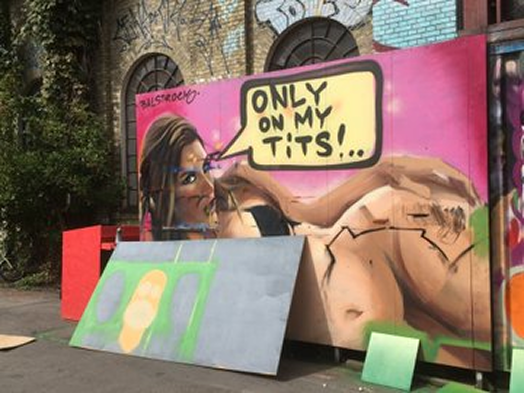
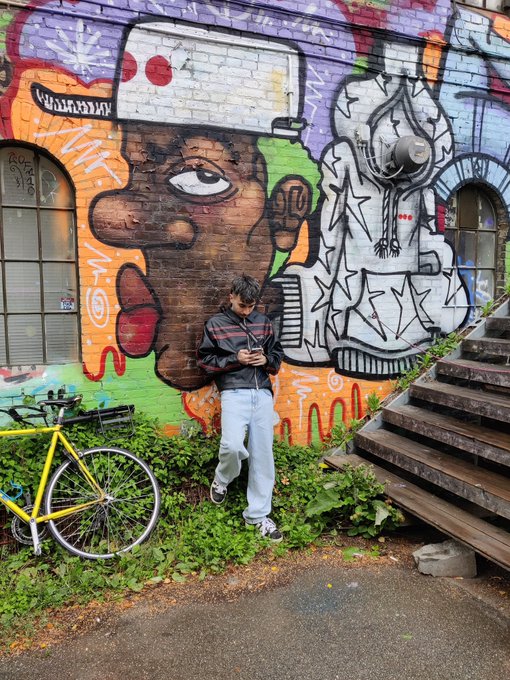 A vibrant street art mural in Christiania, Copenhagen, featuring a large painted face in bold colors on a brick wall. A bicycle leans against the wall, while a person stands nearby looking at a phone, capturing the everyday life and creative atmosphere of the Free Town.
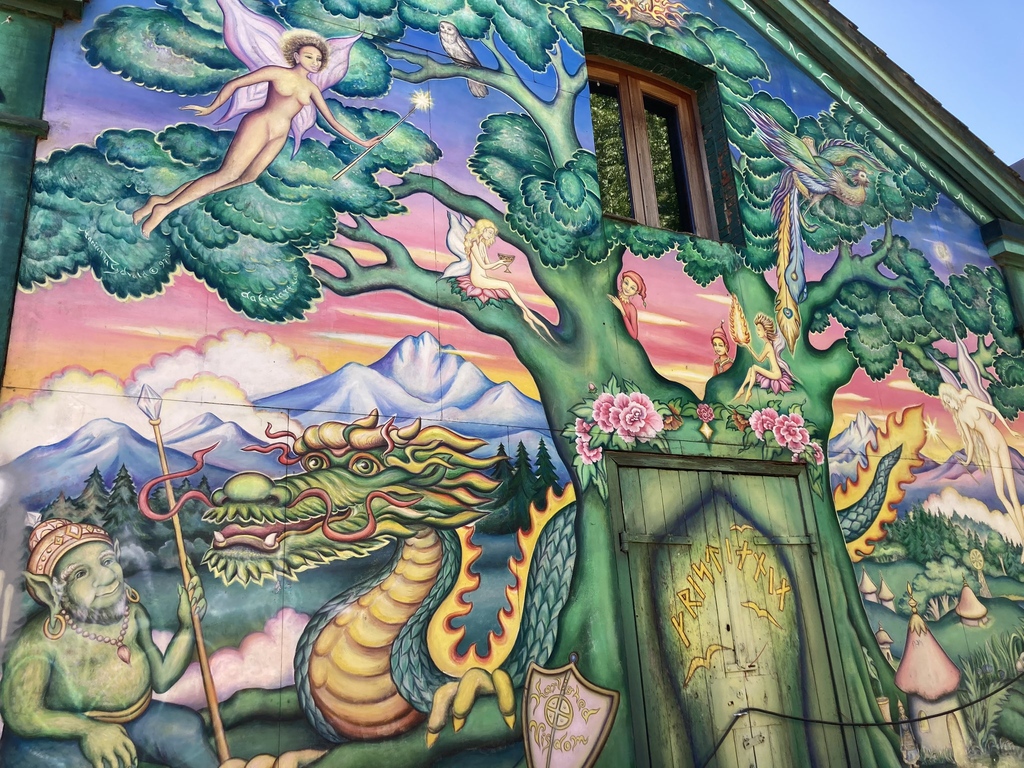 A colorful fantasy mural in Christiania, Copenhagen, showing fairies flying among tree branches, a dragon figure, birds, and mountains in the background. The detailed artwork covers the building facade and reflects the Free Town’s imaginative, mythical, and artistic spirit.
Christiania is unlike any other part of Copenhagen. Once you step inside, you feel as if you’ve entered a parallel reality. The air is heavy with the smell of marijuana, walls are covered in murals and graffiti, and the streets are filled with people in colorful clothes, handmade jewelry, and all kinds of alternative styles.
The atmosphere is a mix of hippie freedom, street art, and underground culture. It feels like a giant art installation that is constantly evolving. Every corner of Christiania is filled with creative expression — from sculptures made of recycled materials to psychedelic paintings and street performances.
Despite its rebellious vibe, the area is surprisingly calm. Visitors often describe Christiania as “peaceful anarchy.” Locals are friendly, but they are also protective of their territory and their rules. The number one rule: respect the community. Don’t take photos in forbidden places, don’t cause trouble, and be mindful that you are a guest in a unique experiment in self-governance.
At night, Christiania transforms again. The lights of bars and music venues come alive, concerts echo across the community, and the feeling of stepping outside the “system” becomes even stronger.
Forbidden in Christiania
Even in the “Free Town,” freedom has its limits. To preserve safety and the spirit of the community, Christiania has introduced a set of rules that all visitors and residents must respect.
❌ No photos in the Green Light District
In the “Green Zone,” where cannabis was traditionally sold, the rule “No photos” has always applied.
The reason is simple — protection from police and media, since photographs could be used as evidence in criminal cases. Even today, tourists are asked to respect this rule, otherwise they may face a harsh reaction.
❌ No hard drugs
Since its founding, Christiania only tolerated the use of “soft” substances, mainly cannabis. The consumption and sale of hard drugs (heroin, cocaine, amphetamines) was officially banned by the community itself. This was a matter of principle: the arrival of hard drugs in the 70s–80s nearly destroyed the atmosphere of the “peaceful experiment.”
❌ No violence
Any form of violence or aggression is not tolerated. Christiania aims to maintain the image of “quiet anarchy” — conflicts are resolved through community meetings or, in extreme cases, expulsion from the territory.
❌ No bulletproof vests, weapons, or armored vehicles
To avoid criminalization, residents set an unwritten rule: no “military attributes.” This space is meant to feel safe for both locals and tourists.
❌ No private property in the classical sense
In Christiania, you cannot buy or sell a house. You can only inherit the right to live there or obtain it with the approval of the community. This way, no corporation or real estate speculator can buy up the land and destroy the experiment.
How to Settle in Christiania Today
Christiania in Copenhagen is a self-governing commune that officially belongs to Denmark but operates with its own internal rules. Therefore, the process of moving there is different from ordinary housing rental.
- Official Residence Permit in Denmark
- Foreigners must first have legal permission to stay in Denmark. This is handled by the Danish Agency for International Recruitment and Integration (SIRI).
- Website: https://www.nyidanmark.dk/
- Email: newtodenmark@us.dk
- Housing in Christiania
- The right to live in Christiania is decided collectively at community meetings whenever a house becomes available. This is an internal process where participation in the community plays an important role.
- Official website: https://www.christiania.org/
- Email for inquiries: info@christiania.org
In practice, to settle in Christiania you must first obtain a residence permit in Denmark and then contact the Christiania community directly for information about potential housing opportunities.
Where to Stay: Inside or Near Christiania?
When planning a trip to Christiania, one of the main questions is whether to stay inside the Free Town itself or choose accommodation nearby in Copenhagen. Each option has its pros and cons.
Staying in Christiania.
There are only a few small guesthouses and private rooms available inside Christiania. The atmosphere is unique — artistic, alternative, and relaxed. If you want to fully immerse yourself in the spirit of the community, this might be the best option. Prices for rooms usually range from €50–90 per night, depending on the season and conditions. Don’t expect luxury: accommodation here is simple, sometimes even rustic.
Nearby areas.
Most travelers prefer to stay outside Christiania, in the Christianshavn district or central Copenhagen, just a 10–15 minute walk away. Here you’ll find everything from hostels to boutique hotels:
- Hostels – from €25–40 per night in a dormitory bed.
- Budget hotels – from €70–100 per night for a double room.
- Mid-range hotels – €120–180 per night.
- Luxury hotels – from €250+ per night.
Restaurants and cafes.
Inside Christiania, you’ll find cozy vegetarian cafes and bars with affordable prices: about €10–15 for a meal, and €3–5 for coffee or beer. In central Copenhagen, prices are higher: a dinner in a mid-range restaurant will cost €20–35 per person, while a cup of coffee usually starts at €5.
Which is better?
If you’re traveling to experience the atmosphere and don’t mind modest conditions — stay in Christiania. If comfort and convenience are more important, choose hotels nearby. Either way, Christiania is within easy walking distance, so you’ll always have quick access to this unique place.
Currency and Best Time to Visit
Currency exchange.
Denmark uses the Danish krone (DKK). The exchange rate is relatively stable:
- 1 USD ≈ 7 DKK
- 1 EUR ≈ 7.5 DKK
Although card payments are widely accepted everywhere, it’s still a good idea to carry some cash, especially for small cafes and markets inside Christiania.
Tourist seasons.
Copenhagen and Christiania attract visitors year-round, but the flow of tourists changes with the seasons:
- High season (June – August): Warm weather, long daylight hours, and many cultural events. Accommodation prices rise significantly, and the streets are crowded. Perfect for those who want to experience Christiania’s vibrant summer life.
- Shoulder seasons (April – May, September – October): Milder weather, fewer tourists, and lower prices for hotels and flights. A great balance between comfort and budget.
- Low season (November – March): Cold, short days, and fewer travelers. Prices for accommodation drop by 20–30%. This season suits those who prefer a calmer atmosphere and don’t mind the Nordic winter mood.
In short: summer brings the crowds, winter brings the peace, and spring and autumn are the sweet spot in between.
Christiania Walking Route (1–2 hours)
Start point: Entrance Gate from Prinsessegade
1️⃣ Street Art Alley
- Just after entering, explore the narrow lanes filled with murals, graffiti, and installations.
- Don’t rush — every corner hides something new.
2️⃣ Morgenstedet Café
- Stop for a vegetarian lunch or a cup of tea.
- A cozy, community-run spot where you can feel Christiania’s slow rhythm.
3️⃣ Loppen Concert Hall
- A legendary venue in a former military building.
- Check posters — maybe you’ll find an evening show.
4️⃣ Green Light District / Pusher Street (⚠️ caution)
- Historically famous for cannabis stalls.
- Follow the rule: No Photos. Just observe the atmosphere.
5️⃣ Lake and Park Area
- A peaceful green zone with benches and wide views.
- Perfect for a short break or picnic.
6️⃣ Handcraft Shops & Workshops
- End the route by visiting small artisan shops.
- Handmade jewelry, paintings, clothing, and souvenirs created by locals.
Finish point: Exit back to Prinsessegade or continue toward Christianshavn.
What to See in Christiania (1–2 Hour Walk)
🖌️ Street Art – wander through the colorful alleys and notice the details: murals, installations, and psychedelic paintings of dragons, fairy-tale trees, elves, and gnomes.
☕ Morgenstedet – a famous café and social hub, often serving vegetarian food in a cozy community atmosphere.
🎶 Loppen – the legendary concert venue. Check the schedule in advance — you might catch a live performance during your visit.
🌿 Green Light Zone / Pusher Street (caution!) – historically the area known for cannabis trade. Tourists are advised to be mindful and avoid taking photos here.
🌊 Lake and Park – a relaxing spot to unwind after your walk, surrounded by greenery and peaceful vibes.
🛍️ Small Workshops & Handcraft Shops – discover souvenirs and unique local creations made by Christiania’s artists and craftsmen.
Etiquette Rules (Important!)
- No photography in restricted zones (especially Pusher Street). If unsure, ask locals. Signs saying “No Photos” are placed around Pusher Street — take them seriously, as local “scouts” are already watching you.
- Respect residents. Don’t disturb, don’t shout at night, and don’t litter.
- No cars. Walk or come by bike.
- Don’t buy/sell prohibited substances. It’s a matter of safety.
- Remember: Christiania is a living social experiment. Be careful and respectful.
How to Get There
- From Copenhagen Airport (CPH): Take metro line M2 to the city center → transfer to Christianshavn. Total travel time ≈ 20–30 min depending on connections and waiting time.
- From central Copenhagen (Nyhavn, Rådhuspladsen): Walk or take a short metro/bus ride. Christianshavn is literally next to the canals and Nyhavn.
- On foot to Christiania: Enter via Christianshavn Bridge or the canal side. A pleasant walk through the central area.
Where to Stay: Inside Christiania or Nearby?
Options & Tips:
- Staying directly in Christiania
- Pros: Full immersion, a unique experience.
- Cons: Limited housing options, often more rustic comfort levels; strict respect for community rules is required.
- Staying in Christianshavn (nearby) — the most practical choice for most visitors
- 5–15 minutes on foot to Christiania.
- Great logistics, lots of cafés and apartments around.
- Staying in central Copenhagen (Strøget / Rådhuspladsen / Nyhavn)
- Pros: Vibrant city life, full tourist infrastructure. Metro/tram connection in 10–20 min.
- Cons: More expensive, more crowded.
Concrete Recommendations (Accommodation + Prices)
💱 Note on exchange rate: As of late 2025, 1 DKK ≈ 0.156 USD. (Always check before booking). Prices below are converted into USD for clarity.
- Hostels (budget): 150–400 DKK / night → ≈ 23–62 USD. (Dorm beds, e.g. Danhostel, central hostels).
- Budget Hotels: 400–800 DKK / night → ≈ 62–125 USD (e.g. Wakeup Copenhagen, Hotel Bethel, close to Christianshavn).
- Apartments / Mid-range: 800–1400 DKK / night → ≈ 125–218 USD (with kitchen and more space).
- Premium / Design Hotels: 1400–3000+ DKK / night → ≈ 218–470+ USD (Radisson, Nimb, etc., in the center).
- Long-term rental: From ~10,000 DKK/month (≈ 1,560 USD), depending on location and conditions.
Food & Drinks: Prices and Recommendations
- Coffee in a café: ≈ 30–50 DKK (≈ 4.7–7.8 USD).
- Quick snack / street food: 60–120 DKK (≈ 9–19 USD).
- Restaurant main course: 120–300 DKK (≈ 19–47 USD).
- Vegetarian/community meals (Morgenstedet, Absalon): 50–150 DKK (≈ 8–23 USD).
- Beer in a bar: 50–80 DKK (≈ 8–12 USD).
Recommendations:
- Morgenstedet (inside Christiania): Famous vegetarian spot; affordable and authentic.
- To save money, shop at supermarkets (Rema 1000, Netto) and cook in your apartment.
- In summer evenings, look out for pop-up bars and food events — great local vibes.
Currency Exchange and Quick Conversions
Approximate rate (tip): 1 DKK ≈ 0.156 USD (check the exact rate on your booking or transfer day).
Examples:
- 500 DKK ≈ 78 USD
- 1000 DKK ≈ 156 USD
- (The rate fluctuates — always use a currency converter or bank for accurate calculations.)
Tourist Seasons: When to Go and Why
Peak Season (busiest time)
June – August (summer)
Why: long daylight hours (almost “white nights” in June), warm weather, festivals (Copenhagen Jazz Festival, city events), lively street atmosphere.
Downside: higher accommodation prices, crowded cafes, lines at attractions.
Comfortable Months (recommended)
May, June, September
Why: mild weather, fewer crowds, mid-range prices, nature in bloom, perfect for walking tours.
Low Season
November – February (winter)
Why: cold, short days, but fewer tourists and major hotel discounts. For those who don’t mind the chill — it’s affordable and quiet.
Daily Budget (approx.)
- Budget travel (hostel, cheap eats, public transport): ≈ 350–700 DKK/day (≈ 55–110 USD)
- Comfort travel (3-star hotel/apartment, several cafes/restaurants, attractions): ≈ 1000–2000 DKK/day (≈ 156–312 USD)
- Luxury travel (premium hotel, fine dining, private tours): from 2500 DKK/day (≈ 390+ USD)
Safety and Practical Tips
- Safety: Christiania is generally considered relatively safe for visitors, but avoid risky situations (drug-selling zones, provocative behavior).
- Health: Tap water in Copenhagen is drinkable, but bring bottled water for longer walks.
- Language: Danish is official, but English is widely spoken — no issues communicating.
- Payments: Denmark is card-friendly; ATMs are available, but keep a small amount of cash for places that require it.
1-Day Itinerary Idea (including Christiania)
- Morning: Breakfast in Christianshavn café, canal walk.
- Before lunch: Visit Christiania — street art, Morgenstedet, small shops.
- Lunch: Light vegetarian meal in Christiania or pizza nearby.
- Afternoon: Walk to Nyhavn → photo session at the harbor → optional canal cruise.
- Evening: Concert at Loppen (check schedule) or drinks at a Christianshavn bar.
Final Tips (Checklist Before the Trip)
- Book accommodation in advance if traveling in July–August.
- Check the current DKK → USD/EUR rate and add a 10–15% buffer for unexpected costs.
- Be respectful, don’t take photos where prohibited.
- Bring comfortable walking shoes and layered clothing (weather changes fast).
- Join community dinners and local concerts for authentic cultural experiences.
If you’re curious about how all this is legally arranged — keep reading.
📜 The Legal History of Christiania
1971 – Founding
A group of hippies, squatters, and artists occupied abandoned military barracks in Copenhagen.
They declared the creation of the “Free Town of Christiania.”
In reality, it was an illegal occupation (squat), but the authorities did not act immediately.
1973–1975 – State Tolerance
Danish politicians chose to tolerate the experiment.
The government officially recognized Christiania as a “social experiment” — initially for 3 years, but it stretched into decades.
It was a unique case: the state allowed people to live under “their own rules,” while still under the municipality’s general oversight.
1980s – Conflicts and First Restrictions
The government began pressuring Christiania over hashish sales on Pusher Street.
Several police raids took place.
Still, Christiania remained a “gray zone”: officially illegal, but de facto existing.
1990s – Negotiations on Legalization
Copenhagen’s municipality tried to integrate the area into the city system.
Christiania received access to public utilities (electricity, water, garbage collection).
At the same time, residents continued not paying rent or property taxes and lived by their own rules.
2004 – The Path to “Normalization”
The Danish government (Venstre party) launched a plan to “normalize” Christiania.
All buildings had to be officially registered, and residents were required to rent or purchase them.
Protests followed, but Christiania had to enter negotiations.
2011–2012 – Legislative Breakthrough
The Danish Parliament passed a special law: Christiania’s land was transferred to the state, but the Christiania Foundation was created.
The Foundation purchased the area (around 34 hectares) from the state at a reduced price.
For the first time, residents gained an official legal status.
Present Day (2013–2025)
Christiania is formally owned by the Christiania Foundation, which manages the territory.
Residents contribute a communal fee for rent and maintenance.
The district has its own self-governing assembly, where decisions are made by consensus.
The Danish state no longer views Christiania as a squat — it is now a legal collective project.
However, police still carry out raids on Pusher Street, as cannabis trade remains officially banned.
⚖️ Key Milestones in Christiania’s Legal Status
- 1971 — Founded as a squat.
- 1973 — Officially a “social experiment.”
- 1980s — Conflicts over drugs.
- 2004 — “Normalization” plan introduced.
- 2011–2012 — Law passed, Christiania Foundation created.
- 2025 — Semi-official autonomy: self-governance + legal status within Denmark.
🔑 In practice:
Today, Christiania is a legalized commune that governs itself through collective decisions, while remaining under Danish law.